
Happy Arrow Master
DRAGONVALE LIMITEDCasual
4.7404.00 Reviews
- Version
- 1.0.20
- Installs
- 500.00K
- Age Rating
- Everyone
Screenshots

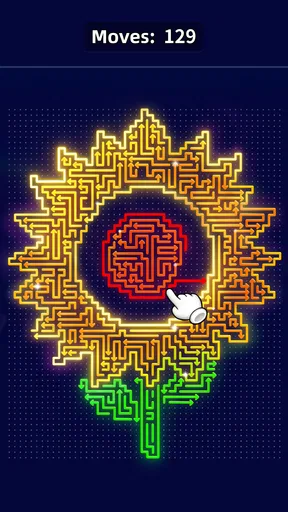

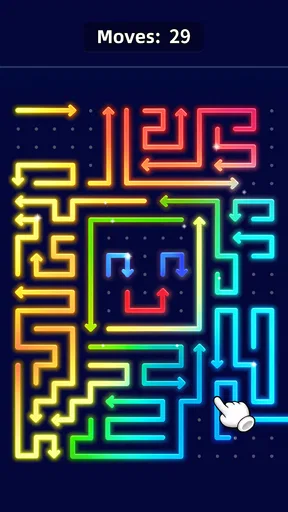


Our Review of Happy Arrow Master
 Analysis by Appyee
I spent time with Happy Arrow Master as a light, pick-up-and-play puzzle game, and its appeal became clear very quickly: each level asks me to think about direction, order, and space before I tap. The basic aim is to clear paths so every arrow can leave the board, but the satisfying part is working out which move opens the next one without creating a blockage. It is simple to understand, yet the best stages make me pause instead of tapping automatically.
This is a casual game from DRAGONVALE LIMITED, available free of charge for players rated Everyone. Its store summary presents the idea in a few words, but the real experience is less about speed tapping and more about reading the board correctly. I would recommend it to someone who enjoys short logic challenges, especially when they want something that can be played in small gaps during the day rather than a game demanding a long session.
How the puzzle feels in everyday play
The first thing I noticed was how quickly the central rule becomes familiar. I look at the arrows, identify the ones with a clear route, and decide whether moving one will help or hurt the rest of the board. That creates a useful rhythm: observe, make a choice, see the result, and reassess. The controls are not complicated, so the challenge comes from planning rather than learning a large control system.
That distinction matters when judging its speed. Happy Arrow Master is not built around frantic reactions, rapid combat, or a race against an opponent. A fast session means I can understand a board and make a few deliberate taps without much setup. A slower session is equally natural because the game gives me a reason to inspect the arrangement before committing. In my experience, that makes it suitable for a short break when I want mental activity without the pressure of a countdown-heavy arcade game.
The strongest levels reward restraint. My first instinct is sometimes to remove the most obvious arrow, but that can be the wrong choice if another piece depends on the same route. I found it more effective to trace possible exits mentally and look for arrows whose movement would expose space behind them. The useful skill is not tapping quickly; it is protecting future moves. That small change in approach makes the game feel more thoughtful than its casual presentation might suggest.
A practical routine helped me avoid unnecessary mistakes. I first scan the outer edges, then inspect arrows pointing toward open space, and only after that consider pieces surrounded by other paths. This is not a formal mode or a hidden setting; it is simply the most reliable way I found to read a crowded board. Players who usually rush through casual puzzles may enjoy the game more after treating each tap as a commitment rather than an experiment.
What happens when the board becomes crowded
The heavier moments arrive when several arrows appear to compete for the same opening. That is where the game can occupy more attention than a quick store summary suggests. I have had boards that looked nearly solved until one early move revealed that the remaining arrows needed a different order. The frustration is mild, but it is useful frustration because it comes from a visible decision rather than an unclear rule.
For everyday use, I see two good ways to play. If I have only a minute, I can open the game, inspect a board, and make progress without needing to remember a large story or complicated objective. If I have longer, I can settle into a sequence of puzzles and use the repeated layouts to sharpen my planning. The game fits both situations better than many casual alternatives that are either purely automatic or dependent on a continuous run.
One non-obvious advantage is that a difficult board can be approached as a sorting problem. Instead of asking which arrow looks easiest, I ask which arrow has the fewest possible routes and whether clearing it will create a chain reaction. This gives me a way to recover from a stalled position without random tapping. It also makes the game more appealing for players who enjoy spatial reasoning but do not want a complicated puzzle interface.
There is a trade-off here. The same simplicity that makes the game accessible can make repeated play feel narrow for someone who needs a wide variety of mechanics. If you prefer match systems, character progression, narrative goals, or puzzles that constantly introduce new rules, this may feel limited. Happy Arrow Master focuses on the board-clearing idea, so its value depends on whether arranging moves remains enjoyable for you over time.
Stability and recovering from an interrupted session
For a casual game, recovery matters almost as much as the puzzle itself. I often play this type of title while waiting for an appointment or taking a short break, which means an interruption can happen at any moment. Happy Arrow Master works best in that context when I treat each board as a small independent task: I can stop after reaching a natural point instead of feeling tied to a long match.
I would still avoid beginning a carefully planned board when I know I may need to put the phone away immediately. The game’s challenge depends on remembering the intended order, and losing that mental thread can be more inconvenient than losing a fast action sequence. That is a limitation of the puzzle format rather than a sign of poor reliability, but it is worth considering if your playtime is frequently interrupted.
The current release is version 1.0.20, and the game has attracted a 4.7 average from around fourteen thousand ratings, with over five hundred thousand installs. Those figures suggest that it has found a substantial audience for its straightforward puzzle loop. I would not treat popularity as proof that every device or player will have the same experience, but it does make the game easier to approach as an established casual choice rather than an obscure experiment.
When I think about reliability here, I separate two things. A puzzle game can be technically stable yet still feel tiring if its boards become repetitive or if progress feels unclear. Conversely, a simple design can be very dependable for quick play because there are fewer systems competing for attention. Happy Arrow Master benefits from that focused structure. I can return to the core task without relearning controls or remembering a complicated set of objectives.
Recovery also depends on how you react to an unsuccessful sequence. My best approach is to stop and identify the first move that reduced my options, then rebuild the solution from there. Tapping randomly usually creates more confusion. This gives the game a small but meaningful learning loop: a failed attempt can teach me to recognize blocked routes earlier, provided I take a moment to examine what went wrong.
Device expectations and resource trade-offs
Happy Arrow Master supports devices running Android 8.0 or later. That makes compatibility reasonably broad for Android users, although the actual feel can still vary with screen size, available storage, background activity, and the general condition of a phone. I would expect the clearest experience on a device where the board is comfortable to inspect, because the main challenge is visual planning rather than complex controls.
The game’s casual format should appeal to people who do not want a demanding mobile title, but I would not confuse a simple puzzle concept with a guarantee of identical performance everywhere. Older phones may handle any app differently from newer ones, particularly when many other apps are open. If your device already struggles with ordinary touch response or frequent background slowdowns, that may affect your enjoyment even when the game itself is uncomplicated.
One practical benefit is that the game does not ask me to learn a large interface before playing. That reduces the mental and visual load on a small screen. I can focus on the arrows and their available routes instead of managing several panels at once. On a compact display, I recommend holding the phone steadily and checking the full board before tapping; rushing from one corner to another makes it easier to overlook a blocked path.
The free entry point is helpful for trying the central loop without committing money first. There are in-app purchases ranging from $1.99 to $99.99 per item, so I would advise checking the purchase flow carefully if children use the device or if you prefer a strictly no-spend experience. The presence of optional purchases does not automatically decide whether the game is worthwhile, but it does mean the free label should be understood as an invitation to start, not as a promise that every possible convenience is included without charge.
That price range also changes how I would recommend the game to different people. For a player who is happy to enjoy the basic puzzle loop and ignore extras, downloading it free makes sense. For someone who dislikes any purchase prompts in a casual game, a paid puzzle with a clearly defined one-time cost may be a better fit. The right comparison is not only about gameplay; it is also about how comfortable you are with optional spending around a simple repeatable mechanic.
Where it stands beside familiar casual puzzles
Compared with match-three games, Happy Arrow Master feels less dependent on creating quick combinations and more dependent on preserving a solution path. A match game often rewards scanning for the strongest immediate move, while this game asks me to consider what the board will look like after that move. Players who enjoy planning several steps ahead may prefer the arrow format, whereas players who want constant visual effects and rapid chain reactions may find it restrained.
It also differs from idle or merge games because the main satisfaction comes from solving the board in front of me, not from waiting for resources, upgrading a collection, or building a long-term production cycle. That is a strength when I want a clean mental break with a clear objective. It is a weakness if I need persistent progression to keep me interested after the individual puzzle is complete.
Traditional brain-training apps can offer a broader menu of exercises, but that variety can make them feel like a collection of tests. Happy Arrow Master is more focused. I know what visual problem I am solving, and I can improve by recognizing route conflicts and move order. If you want one precise activity rather than a large library, that focus is appealing. If you want mathematics, words, memory, and logic in one place, another casual puzzle app will probably serve you better.
The game is also a better match for quiet concentration than for social play. I would choose it over a competitive alternative when I want to control my own pace and avoid pressure from other players. On the other hand, it may not satisfy someone looking for conversation, shared goals, or a strong sense of community. Its personality comes from the puzzle arrangement itself, not from a social layer.
Who should play, and who should skip it
I think Happy Arrow Master is a good choice for adults and younger players who can enjoy visual logic without needing a story. The Everyone age rating makes it approachable for a broad audience, and the controls are easy enough to understand quickly. Parents should still consider the in-app purchase range and use the device’s purchase safeguards if necessary, especially when the game is being offered as a casual distraction for a child.
It is particularly suitable for a commute, a waiting room, or a short evening wind-down. Imagine having ten minutes before an appointment: instead of starting a game that demands a long uninterrupted run, I can solve a board or two and put the phone away. The same quality makes it useful for someone who wants a low-pressure way to exercise attention without opening a full strategy game.
I would skip it if your ideal mobile game needs a deep campaign, expressive characters, competitive rankings, or constant mechanical surprises. I would also be cautious if you become annoyed by repeating a puzzle after one poorly chosen move. The game asks for patience, and its simple controls leave little distraction from the result of each decision. That honesty is part of its appeal, but it can expose the limits of the format for players who need more variety.
Another group that may want a different option is anyone seeking a game with a clearly defined offline routine or a broad set of accessibility controls. I prefer not to assume how every device handles connectivity, text size, or touch assistance, so I would test the first few boards on your own phone before making it a regular travel companion. The important point is that the game’s enjoyment depends on seeing the board comfortably and responding accurately to taps.
My performance verdict after regular short sessions
Happy Arrow Master succeeds because it keeps its central idea easy to grasp while leaving room for careful decisions. Its perceived speed is appropriate for a calm casual puzzle: I can begin quickly, play at my own pace, and stop without the feeling that I abandoned a major event. The most demanding moments are mental rather than graphical, especially when several arrows appear to depend on the same opening.
Its focused design should also make it less mentally demanding than a game filled with menus, upgrades, and simultaneous objectives. Still, the experience is not completely effortless. Crowded boards require attention, interrupted sessions can break a planned sequence, and repeated play may feel narrow if you need constant novelty. Those are the main friction points I would weigh before installing it.
DRAGONVALE LIMITED has made a free casual game that is easy to recommend selectively rather than universally. I would point it toward a friend who likes compact logic puzzles, wants something suitable for short sessions, and enjoys learning from a wrong move. I would steer a friend seeking a story-driven adventure, a social game, or a richer progression system elsewhere.
My final advice is to play deliberately from the start. Scan for the arrows with the fewest escape options, clear routes that open space for several others, and avoid using random taps as a substitute for planning. That approach reveals the game’s real strength: it turns a very small rule set into a series of decisions that can be relaxing when the board is open and surprisingly absorbing when it is crowded. For the right player, that is enough to make this a worthwhile addition to a casual puzzle collection.
Verdict
Strengths of Happy Arrow Master
- Simple controls make it easy to start playing immediately.
- Short levels are convenient for quick gaming sessions.
- Bright visuals give the game a cheerful, accessible style.
- Increasing challenges provide a steady sense of progression.
- Works well for casual players who prefer relaxed gameplay.
Limitations of Happy Arrow Master
- Gameplay may feel repetitive after extended sessions.
- Some levels can depend more on timing than strategy.
- The colorful presentation may not appeal to every player.
- Progress can feel slow for users seeking fast rewards.
- Performance may vary on older or less powerful devices.
Similar Picks in This Category
View All
My Talking Angela
Outfit7 Limited4.2

My Talking Tom
Outfit7 Limited4.3

Pou
Zakeh4.2

My Talking Tom 2: Pet Game
Outfit7 Limited4.3

Candy Crush Saga
King4.6

Bridge Race
Supersonic Studios LTD4.1
Frequently Asked Questions
What is Happy Arrow Master and how is the gameplay?
Happy Arrow Master is a casual archery-style game focused on aiming, timing, and hitting targets with arrows. Players generally progress through short levels by adjusting the shooting angle, accounting for obstacles or movement, and completing objectives. Its simple controls make it approachable for quick sessions, while later stages may require more careful planning and accurate shots.
Is Happy Arrow Master free to download and play?
Happy Arrow Master can typically be downloaded at no initial cost, but the available version may include advertisements, optional in-app purchases, or both. These extras can provide cosmetic items, bonuses, or other conveniences, depending on the version installed. Before downloading, check the Google Play Store or App Store listing for current pricing, purchase details, and supported payment options.
Can I play Happy Arrow Master offline?
Some parts of Happy Arrow Master may remain playable without an internet connection, especially the basic single-player levels. However, advertisements, cloud-related features, updates, event content, or purchases may require online access. Because offline functionality can vary between releases and devices, it is best to test the game after installation and review the developer’s latest store description.
Is Happy Arrow Master suitable for children?
Happy Arrow Master uses a simple, cartoon-like archery concept and is generally easy to understand, but suitability depends on the child’s age and the content shown in the installed version. Parents should review the game’s age rating, advertising, in-app purchase options, and privacy information. Enabling parental controls is also recommended if children use a shared device.
What should I check before installing Happy Arrow Master?
Before installing Happy Arrow Master, check that your Android or iOS device meets the stated requirements and has enough free storage for the download and future updates. Also review the app permissions, privacy policy, age rating, advertising information, and in-app purchase details. Installing the latest official version from a trusted store helps reduce compatibility and security concerns.
Play our best games!


